|
|
|
Brian Sullivan |
|
CCSI, 2001 |
|
|
|
|
|
|
|
|
Only national organization for goats in Canada |
|
Animal identification (pedigrees recording) |
|
Milk recording |
|
Type classification |
|
Shows and competitions |
|
Certificates and awards |
|
Quarterly magazine |
|
|
|
|
|
|
|
|
|
|
|
|
|
|
|
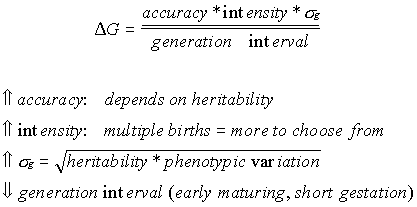
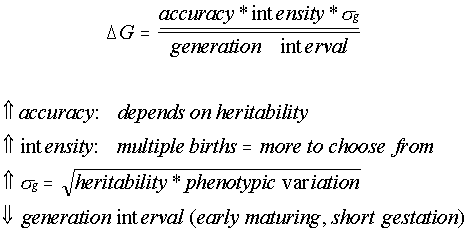
Multiple births (twins or triplets common) |
|
Seasonal |
|
Breed from late August to mid-February |
|
Kid from December through July, mostly between
February and May |
|
Short gestation (5 months) |
|
Early maturing |
|
Breed at 7-12 months of age |
|
1st parity at 12-17 months of age |
|
|
|
|
|
|
|
|
|
|
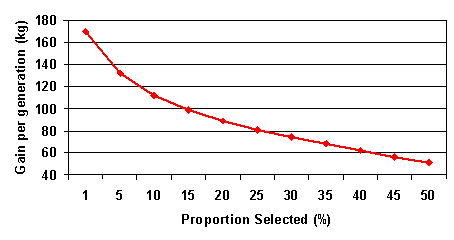
Increase milk yield per doe |
|
|
|
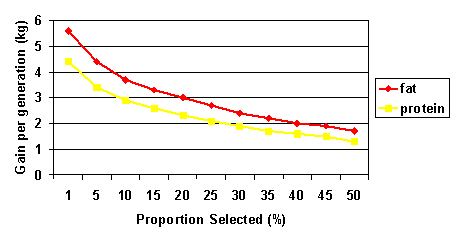
Maintain or increase fat% and protein% |
|
|
|
Maintain or improve body conformation |
|
|
|
|
|
Milk, fat and protein yields |
|
Fat % and protein % |
|
8 linear type traits: |
|
General appearance 5.Mammary system |
|
Feet and legs 6. Fore udder |
|
Body capacity 7. Rear udder |
|
Dairy character 8. Teats |
|
|
|
|
|
Production Index (Pindx) |
|
Equal emphasis on milk and fat EBVs |
|
Mammary System Index (MSindx) |
|
35% MS + 28% FU + 28% RU + 9% TE |
|
Final Score Index (Tindx) |
|
25% GA + 12% FL + 10% BC + 10% DC + 43% MSindx |
|
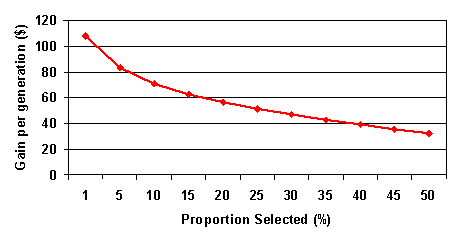
Production-Type Index |
|
60% Pindx + 40% Tindx |
|
|
|
|
|
|
|
|
|
|
|
|
Dairy goat industry relatively small in Canada,
but growing with increasing demand for dairy goat products |
|
Comprehensive testing and evaluation programs
exist |
|
Participation of larger herds is increasing |
|
Potential for genetic improvement is large |
|
|
|
|
Milk yield per goat could potentially double in
the next 10 to 15 years, while still maintaining or improving other traits
of interest |
|
For this to happen, larger breeders must
continue to participate in the recording programs and learn how to make
effective use of genetic evaluations |
|
|
|
|
|
|
|
|
|

 Notes
Notes